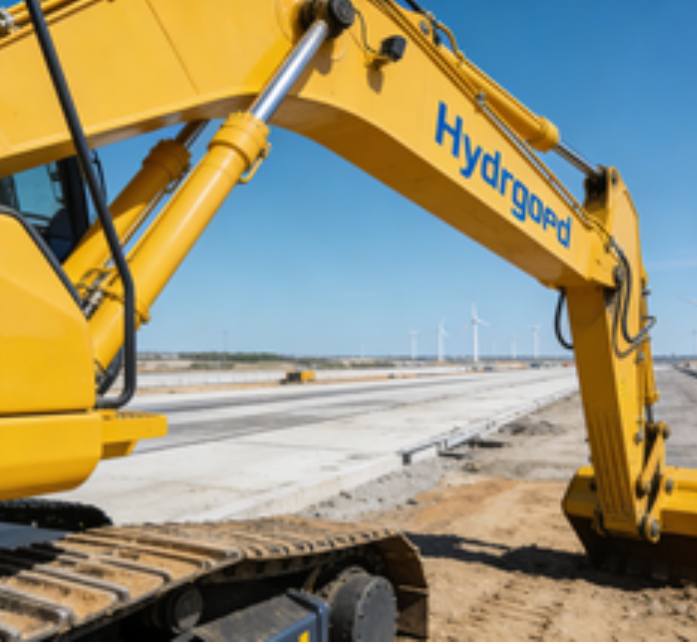
Governments worldwide are rolling out comprehensive strategies to de-risk hydrogen investments. The European Union’s Hydrogen Strategy targets 6 GW of renewable hydrogen production by 2030, with dedicated funding for heavy-duty transport and industrial applications. In Japan, the “Hydrogen Society” roadmap mandates that 10% of construction machinery be hydrogen-powered by 2030, supported by tax incentives and public procurement mandates. China’s “Hydrogen Energy Industry Development Plan (2021–2035)” allocates RMB 10 billion for R&D and infrastructure, including hydrogen refueling stations at construction hubs. These policies not only set clear decarbonization targets but also create a favorable ecosystem for manufacturers and operators to transition.
Recent advancements have addressed the core challenges of hydrogen-powered machinery. Modern proton exchange membrane (PEM) fuel cells achieve energy efficiencies exceeding 60%, with power densities of 3.5 kW/kg, enabling compact integration into excavators and loaders. For example, SANY’s 220-ton hydrogen mining excavator uses a 500 kW fuel cell system, delivering a continuous operating time of 8–10 hours on a single refuel. High-pressure (700 bar) hydrogen storage tanks have reduced weight by 25% while increasing capacity, and refueling times have been cut to under 15 minutes—comparable to diesel refueling. Advanced thermal management systems also enable reliable operation in extreme temperatures from -40°C to 50°C, expanding deployment to cold-climate construction sites and desert mining operations.
Large-scale infrastructure and mining projects are increasingly prioritizing hydrogen solutions for their unique advantages. In open-pit mining, hydrogen trucks and excavators eliminate the need for extensive battery charging infrastructure, enabling 24/7 operations in remote locations. A single 300-ton hydrogen mining truck can reduce annual CO₂ emissions by over 2,500 tons compared to diesel equivalents, while also eliminating particulate matter and NOₓ pollution. In Europe, contractors working on EU-funded projects are required to use zero-emission machinery, driving demand for hydrogen-powered excavators and cranes. In Southeast Asia, port operators are adopting hydrogen reach stackers to meet International Maritime Organization (IMO) decarbonization targets, with major ports in Singapore and Malaysia already deploying pilot fleets.
While hydrogen machinery still carries a premium upfront, operational and lifecycle cost advantages are rapidly narrowing the gap. For a 50-ton hydrogen excavator, the hourly fuel cost is approximately RMB 40–50, compared to RMB 90–100 for diesel models. Maintenance costs are also lower: fuel cell systems have fewer moving parts, reducing annual servicing expenses by 40% compared to diesel engines. In high-intensity mining operations, total annual operating costs can be reduced by 35–40%, with lifecycle savings exceeding RMB 1.5 million over 10 years. As green hydrogen production scales and component costs fall, the upfront price premium is projected to drop below 15% by 2030, making hydrogen machinery a financially viable choice for mainstream adoption.
Chinese construction machinery enterprises are at the forefront of hydrogen technology development, leveraging strong domestic policy support and manufacturing scale. Companies like XCMG, SANY, and LiuGong have launched full ranges of hydrogen-powered excavators, loaders, and trucks, with exports to Europe, Australia, and the Middle East growing by 180% in 2025. These firms are not only exporting equipment but also establishing localized hydrogen infrastructure and service networks, positioning China as a global leader in the transition to sustainable heavy industry.
This transition is not just about replacing fossil fuels—it’s about reimagining construction and mining as sustainable, low-carbon industries. Hydrogen-powered machinery is set to play a critical role in achieving global decarbonization goals, unlocking new possibilities for heavy industry in the decades to come.